|
|
EUROPEAN COMPOST NETWORK
ECN e.V.
|
Network for Organic Resources and Biological Treatment
|
|
|
|
|
|
|
ECN E-BULLETIN No. 10_2026
|
|
|
|
|
|
|
Interreg CORE I Final Event I 21-22 October 2026 I Almagro (Spain)
|
Two Days of Exchange, Insights and Inspiration in Spain
|
|
|
|
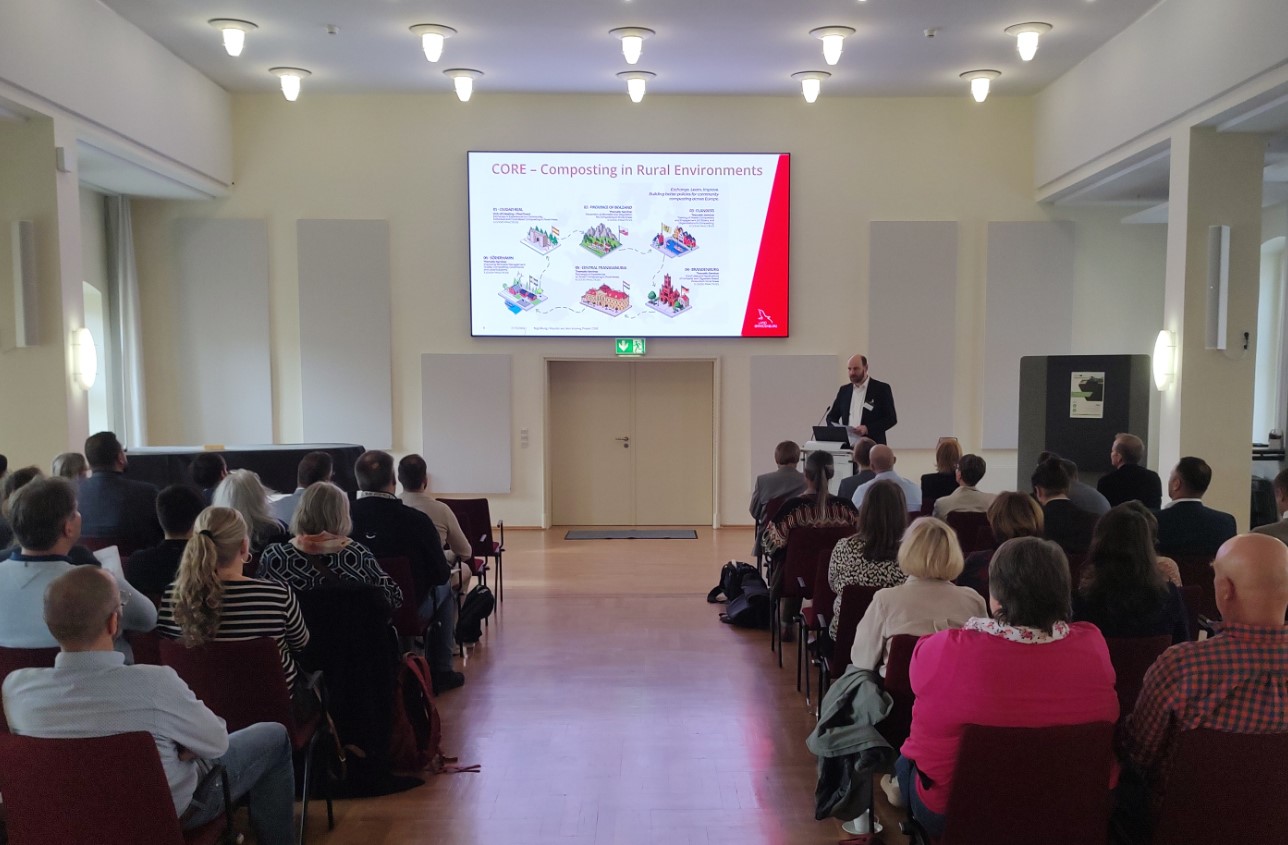
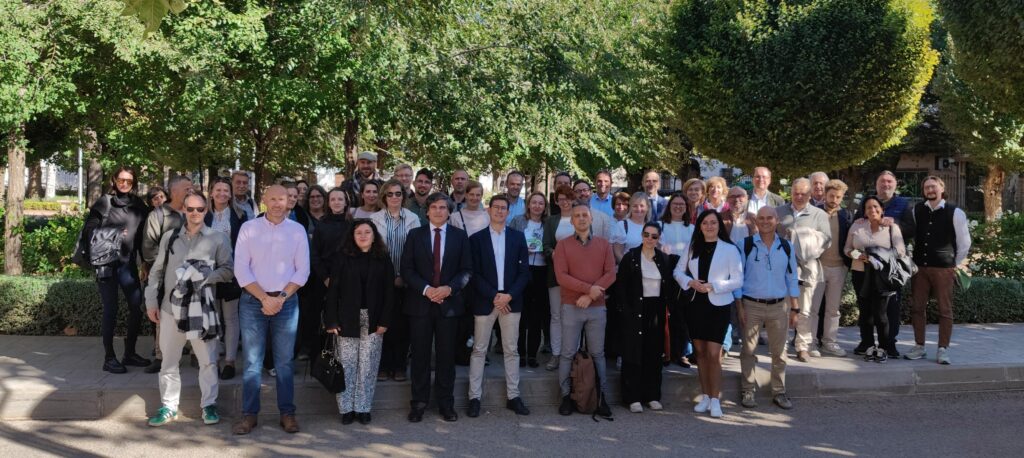
Although the Composting in Rural Environments (CORE) project will officially continue until early 2027, its Final Event took place on 21–22 October 2026 in Almagro, Spain. Hosted by project Lead Partner RSUSA, the event brought together project partners and experts to reflect on the project's achievements and discuss the future of biowaste management.
The event opened with welcoming remarks from representatives of regional and provincial authorities, RSUSA and the Interreg Europe Programme. Lead Partner RSUSA then looked back on the CORE journey, highlighting how partner regions and organisations had exchanged knowledge, learned from one another and achieved valuable results in their territories.
This was followed by a presentation from an Interreg Europe Policy Officer entitled “Interreg Europe: Insights on the Present and Future of Interregional Cooperation”, offering insights into the programme's current activities and future perspectives.
A key highlight was the interactive workshop “Drawing on Experiences and Examples from CORE”, chaired by Ramón Plana, PhD. Representatives from the partner territories discussed the project's impact, shared lessons learned and explored how successful practices and knowledge gained through CORE could be transferred and adapted to other regions.
The programme also featured two expert presentations. Inés Iribarren, Technical Advisor at MITECO (Spain's Ministry for Ecological Transition and the Demographic Challenge), presented the Spanish Ministerial Order on the treatment of biodegradable waste through domestic, community and agricultural composting. Stefanie Siebert, Executive Director of ECN, provided a European perspective with her presentation “Future Perspectives for Biowaste Management in Europe – An EU Policy Outlook”.
Beyond the livestreamed programme, participants also had the opportunity to explore practical examples during two study visits. At the CTRU Almagro composting facility, they learned about local biowaste treatment. The second visit took them to a Care Centre for People with Intellectual Disabilities (CADI), where food waste is composted on-site, monitored using the Smart Composting app, and the resulting compost is used for planting projects across the municipality of Manzanares.
We would like to sincerely thank RSUSA for hosting the Final Event and all CORE partners for their commitment, collaboration and valuable contributions throughout the project. The exchange of knowledge and experiences across the partner territories has been at the heart of CORE and will continue to inspire more sustainable approaches to biowaste management.
|
|
|
|
|
Missed the event? The livestream is still available here: LINK
|
|
Further Information about CORE: LINK
|
|
|
|
|
|
LfU Brandenburg - Final Stakeholder Meeting In Potsdam
|
|
|
|
The overall results of the CORE project, the insights gained through the exchange of experiences and study visits, and the future strategy for implementing the key findings from the CORE project in the field of biowaste management were presented at the final stakeholder event on October 27, 2026, in Potsdam.
|
|
|
|
|
Nearly 60 participants from public waste management authorities, facility operators, the MLEUV, and LfU attended the event. In addition to presentations on the benefits of participating in the CORE project and the “Strategy Paper on the Development of Waste Management Planning for the Management of Biowaste,” the presentations at the event covered the current state of the art in biowaste recovery, quality control, changes in legal regulations, and preventive measures to avoid littering by biowaste. The final stakeholder event of the CORE project should not be viewed as the end of the exchange between the stakeholders, but rather as the beginning of a “Biowaste Forum,” which will take place regularly in the future.
|
|
|
|
|
|
|
Waste Framework Directive and Landfill Directive | Waste Early Warning Report 2027
|
Consultations ahead of the next Waste Early Warning Report
|
|
The Commission organised a public consultation on the next Early Warning Report for 2027 to assess the progress made by Member States towards achieving the 2030 recycling target for municipal waste (among others), identify Member States at risk of missing the targets and provide general and country-specific recommendations for Member States to improve their waste management performance.
|
|
The ECN gathered feedback from its members and submitted a feedback that can be accessed here: LINK.
In brief, ECNs feedback highlights the urgent need to improve bio-waste collection and recycling across EU Member States. Key recommendations include dedicated bio-waste recycling targets, harmonised monitoring, stronger enforcement of separate collection obligations and improved input quality. ECN also calls for the promotion of effective collection systems, such as door-to-door collection, and sufficient treatment capacity to ensure the production of high-quality compost and digestate.
The European Environmental Agency (EEA) will also consult Member States through a questionnaire on the state of play of their implementation in view of meeting the municipal waste and landfill targets. In addition, the Commission has commissioned a study that includes the task to present the EEA country assessments to (mainly) national stakeholders. The consultations will focus on requesting stakeholders’ input on what they think general and country-specific recommendations should be – to support Member States in their effort to improve waste prevention, separate collection, sorting and recycling, with a view to achieving the targets.
The Early Warning Report is expected to be published in late 2027.
|
|
|
|
|
|
|
Public consultation | Deadline: 13 November 2026
|
Extension of the rules on recovered nitrogen from manure (RENURE) to certain types of digestate
|
|
|
|
The Commission has launched a call for evidence on a draft proposal to extend the RENURE Act, adopted in March 2026, to certain types of liquid digestate derived from livestock manure.
|
|
This amendment would allow the use of these products above the limit of 170kg/ha/yr of nitrogen set by the Nitrates Directive. The initiative is supported by a new report published by the JRC assessing the potential for the safe use of agricultural digestates as fertilising products.
The consultation is open until 13 November: LINK.
After the consultation period, the draft proposal will need to be endorsed by a majority of Member States within the Nitrates Committee. If supported, the proposal will be subject to a three-month scrutiny period by the Parliament and the Council, and if no objections, the Commission will formally adopt the amendment.
|
|
|
|
|
|
|
Public consultation | Deadline: 13 January 2027
|
Public consultation on biobased plastic packaging
|
|
|
|
The Commission opened a public consultation in the context of the implementation the Packaging and Packaging Waste Regulation (PPWR). Article 8 of the PPWR requires the Commission to review, by February 2028, the technological advancements and environmental performance of biobased feedstock in plastic packaging.
|
|
Based on this review, the Commission will, where appropriate, present a legislative proposal to establish the framework for targets for biobased feedstock and relevant requirements. The proposal is expected to be presented in the third quarter of 2027.
This consultation, which takes the form of a questionnaire, aims to help the Commission assess the technological development and environmental performance of biobased plastic packaging, possible sustainability requirements and targets for biobased feedstock, whether to use biobased plastic feedstock to help achieving recycled content targets (in specific cases such as food-contact materials) and whether to amend the definition of biobased plastic.
In addition, on 21 October, the Commissioner for Environment launched the Bio-based Europe Alliance, a voluntary initiative that brings together European buyers of bio-based materials and products, primary producers, suppliers, and national and regional authorities committed to accelerating the uptake of European bio-based solutions.
The consultation is open until 13 January: LINK.
|
|
|
|
|
FertiCovery I Webinar I 27 October 2026
|
Recording about analysing results of recycled fertilising products available now!
|
The FertiCovery project organised an online workshop on Fertilising Products from Secondary Raw Materials: From Evidence to Practice on 27 October.
The workshop focussed on product composition, safety, environmental impact and plant response with the information needed by farmers, fertiliser companies, researchers and policymakers.
The presentations and video recording are now available on the event webpage.
|
|
|
|
|
|
|
|
|
|
|
European Mission Soil Week I 17-18 November 2026 I Dublin (IE)
|
Turning Knowledge into Impact
|
|
|
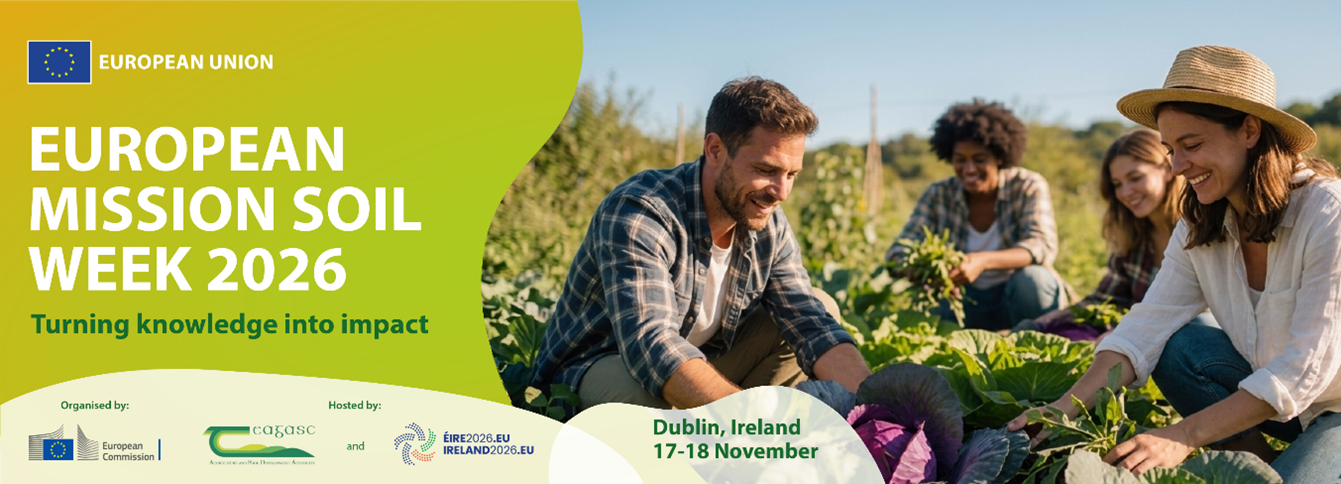
The fourth edition of the European Mission Soil Week will take place on 17–18 November 2026 in Dublin (Ireland), hosted by Teagasc and the Irish Presidency of the Council of the EU. Alessandra Zampieri, Director of Sustainable Resources at the European Commission’s Joint Research Centre (JRC), will give the keynote speech, ‘Are Europe’s soils getting healthier?’.
|
|
The event will bring together policymakers, researchers, farmers, land managers, financial institutions, businesses, philanthropic organisations and citizens, to share knowledge and explore challenges and solutions for sustainable soil management. Through sessions, exhibi-tion stands and networking, it will foster collaboration, large-scale innovation and promote the implementation of the Mission Soil across Europe. The event will be hybrid.
Further information: LINK.
Registration: LINK.
|
|
|
|
|
|
|
EU Commission I EU Horizon Programme 2026-2027
|
New calls for proposals with strong synergies to the Carbon Removals and Carbon Farming Regulation (CRCF)
|
Three topics stand out for the CRCF community:
|
- Living labs for ecosystem restoration (“HORIZON-NATURE-2027-02-02”): including work to improve the monitoring and reporting of the biodiversity impacts of carbon farming.
More info: LINK.
Deadline for applications: 14 January 2027.
- Networking and scaling up living labs (“HORIZON-NATURE-2027-02-03”): with an ex-plicit task to facilitate Buyers Clubs to foster the market uptake of nature credits and carbon farming.
More info: LINK.
Deadline for applications: 14 January 2027.
- Carbon farming innovation and scale-up (“HORIZON-CL6-2027-02-CLIMATE-03”).
More info: LINK.
Deadline for applications: 23 September 2027.
|
|
|
|
|
|
EU Commission I Horizon Europe 2026 projects
|
New HORIZON projects funded
|
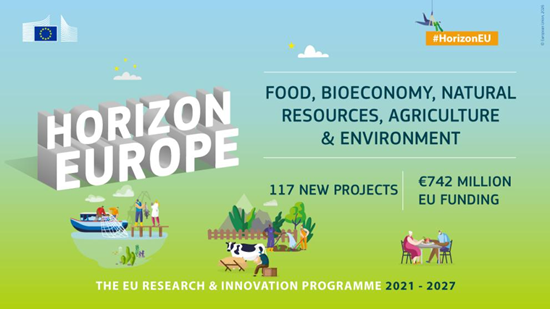
The European Commission has allocated €742.5 million to 117 new projects under Horizon Europe Cluster 6, covering food, bioeconomy, natural resources, agriculture and the environment.
Several projects that started in 2026 address topics of particular interest on biowaste, recycling, nutrient recovery and food contamination including:
|
- Composting – COMPERF4EU will investigate co-composting of biowaste and compostable packaging to produce sustainable compost.
- Food Pollution – PURE_FOOD will address the impact of pollutants such as microplastics, PFAS, ARG, pesticides and pharmaceuticals on the environment from materials derived from the food and drink industry sector.
- Nutrient management – FARMORY will develop digital tools to help farms manage nutrients, water and other resources more sustainably.
- Biofertilisers – FLEX-IN-BIO will develop more resource-efficient bio-based industrial processes, including biofertiliser production.
- Wastewater reuse – AYUMI will explore agricultural reuse of treated wastewater, including nutrient valorisation and avoided fertiliser use.
|
Additional projects with strong links to circular bioeconomy are the following:
|
- CIRCULANDIA — Circular systemic solutions for regenerative agriculture, local food systems and reusable packaging
- Circular nutrients, biowaste value chains and regional implementation.
- STRONGBIONET — Strengthening and connecting European bioeconomy networks
- Strategic networking and engagement of the European composting sector.
- CASI-BIO — Cascading and Sustainable Innovation for the Bioeconomy
- Sustainable biomass use, circularity and policy development.
- BIOSCALES — Sustainable and circular bioeconomy innovation ecosystems
- Sustainable biomass use, circularity and policy development.
- EmerGO — Tracking and reducing persistent and emerging pollutants in food and drink systems
- Monitoring and mitigation of pollutants relevant to biowaste quality.
- MARVELA — Monitoring and mitigation of agricultural non-CO₂ greenhouse gases and ammonia
- Emissions monitoring and mitigation, particularly relevant to organic fertiliser use.
|
|
|
|
|
|
|
FertiCovery I Open forum event I 25 November 2026
|
From Nutrient Recovery to Resource Valorisation
|
The FertiCovery Open Forum is organised together with UNITED CIRCLES EU project and it aims at showcasing the progress and results achieved in the development of innovative solutions for nutrient recovery, the valorisation of waste and byproducts, and their integration into new circular value chains.
The event and discussions will be in Spanish (in-person).
Venue: CARTIF, Boecillo Technology Park, parc. 205
Municipality: BOECILLO
Province: Valladolid, Spain
More information and registration: LINK.
|
|
|
|
|
|
|
|
|
ECOMONDO, Rimini (Italy), 3–6 November 2026
|
ECN’s Policy Officer Aline Granjard attending Ecomondo
|
|
This year, ECN will be joining the Italian Composting and Biogas Association (CIC) at their stand at ECOMONDO, the leading international event in the green and circular economy sectors.
|
|
This is a unique opportunity to meet companies, institutions, researchers and stakeholders, share experiences, and discuss the innovations, challenges and opportunities driving the ecological transition.
|
|
Our Policy Officer, Aline Granjard, will present an update on European policy at the CIC Annual Conference on 4 November. ECN will also be displaying a poster at CIC’s booth showing how compost improves soil health.
|
|
Location: Booth 206-307 – Hall D3.
|
|
|
|
|
|
|
Registration open I 9-11 November 2026
|
ISWA World Congress 2026
|
|
The ISWA World Congress 2026, hosted by CIWM in partnership with ISWA, is dedicated to showcasing global best practices in resource and waste management.
|
|
Join ISWA in highlighting the critical role of effective systems in protecting health, the environment and economies, promoting circular economy principles, and strengthening international collaboration to help move the world beyond waste.
|
|
More information here: LINK
|
|
|
|
|
|
|
18. Bad Hersfelder Biomasseforum | Neue Perspektiven der Biomassenutzung
|
Conference on biomass use in Bad Hersfeld, Germany, 10 & 11 November 2026
|
|
The ECN will participate in this year’s event with a presentation titled “Progress of biowaste collection in Europe – Current Status and Challenges”, including recent policy amendments relevant to collection and the results of the BRIT-EU project. The conference hosted by the Witzenhausen Institut includes as well presentation by ECN members Fachverband Biogas and Bundesgütegemeinschaft Kompost.
|
|
Registration is still open and can be accessed here: Link
|
|
|
|
|
|
|
Registration open I 11-12 November 2026
|
3rd Austrian Compost Congress
|
|
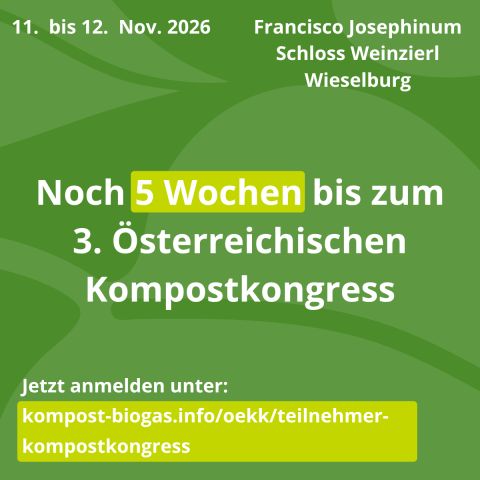
The Austrian Compost and Biogas Association is organizing the 3rd Austrian Compost Congress from November 11th to 12th, 2026, at the Francisco Josephinum in Wieselburg.
|
This year, you can once again expect interesting lectures and discussions. Well-known exhibitors from the composting sector will be present! 250 visitors are expected.
|
|
|
|
Key topics of the event will include:
|
- What are the latest developments in laws and standards in the composting sector?
- What are the key issues in the industry?
- Compost vs. composted soils vs. growing media
- What is the value of compost? (Practical reports)
- Technology presentations
|
|
|
|
On the second day (12/11) the session “What Is Compost Worth?” will kick things off—featuring, among others, Angelika Lübke-Hildebrandt from URS Landmanagement, Manuel Böhm, Eng., from the HUMUS Movement, Gabriele Höfler, MSt.In., from LINI Landlabor, Dr. Stefanie Siebert from ECN, and Dr. Johannes Pulsfort from the Vienna University of Economics and Business (WU Wien).
|
|
Join us and register here. Further information can be found at: LINK
|
|
To receive the latest information follow the new announcements of KBVÖ on LinkedIn.
|
|
|
|
2nd European Bioeconomy Conference
|
Shaping the future of Europe’s Bioeconomy
|
|
The 2nd European Bioeconomy Conference will take place in Brussels on 19 November 2026, bringing together policymakers, industry leaders, innovators and key stakeholders to discuss how Europe can unlock the full potential of the bioeconomy.
|
|
Building on the success of last year’s inaugural edition, the conference will explore key topics including bioresource supply chains, investment, competitiveness, trade and circularity, with a particular focus on sectors such as agriculture and food, bioenergy and paper for recycling.
|
|
The programme will combine high-level panels, interactive sessions and networking opportunities, creating space for exchange and discussion on practical pathways for Europe’s bio-based future.
|
Places are limited and registration is subject to an application process.
Further information: LINK
|
|
|
|
|
|
|
HumusKlimaTag I 24-25 November 2026 Berlin
|
Across Germany: Exploring Ways to Increase Humus in Arable Soils
|
The HumusKlimaNetz is a pilot and demonstration project to investigate the possibility of increasing humus content in arable soils. The project is being conducted on 150 farms across Germany, half of which are organic and half conventional. The main objective is to evaluate long-term measures for the preservation and buildup of humus. With the aim of implementing these measures on a broad scale by the end of 2027.
More information: Link
|
|
|
|
|
|
S.O.S Save Organics in Soil
|
This international initiative S.O.S. SOIL – Save Organics in Soil, led by the European Compost Network (ECN) and the Italian Composting and Biogas Association (CIC), aims to highlight the importance of soil organic matter to encourage policy makers to develop instruments to move Europe towards implementing sustainable, climate proof soil management practices.
|
|
Sign the manifesto 'Save Organigs in Soil' here.
|
|
|
|
|
|
|
|
|
|
ECN-QAS Trade Mark No 011007168
Trade mark for certified quality assurance
organisations, compost and digestate products
according to ECN-QAS
Website: www.ecn-qas.eu
|
|
|
|
|
|
|
|