|
|
EUROPEAN COMPOST NETWORK
ECN e.V.
|
Network for Organic Resources and Biological Treatment
|
|
|
|
|
|
|
ECN E-BULLETIN No. 6_2026
|
|
|
|
|
|
Members of ECN meet in Brussels
|
|
|
|
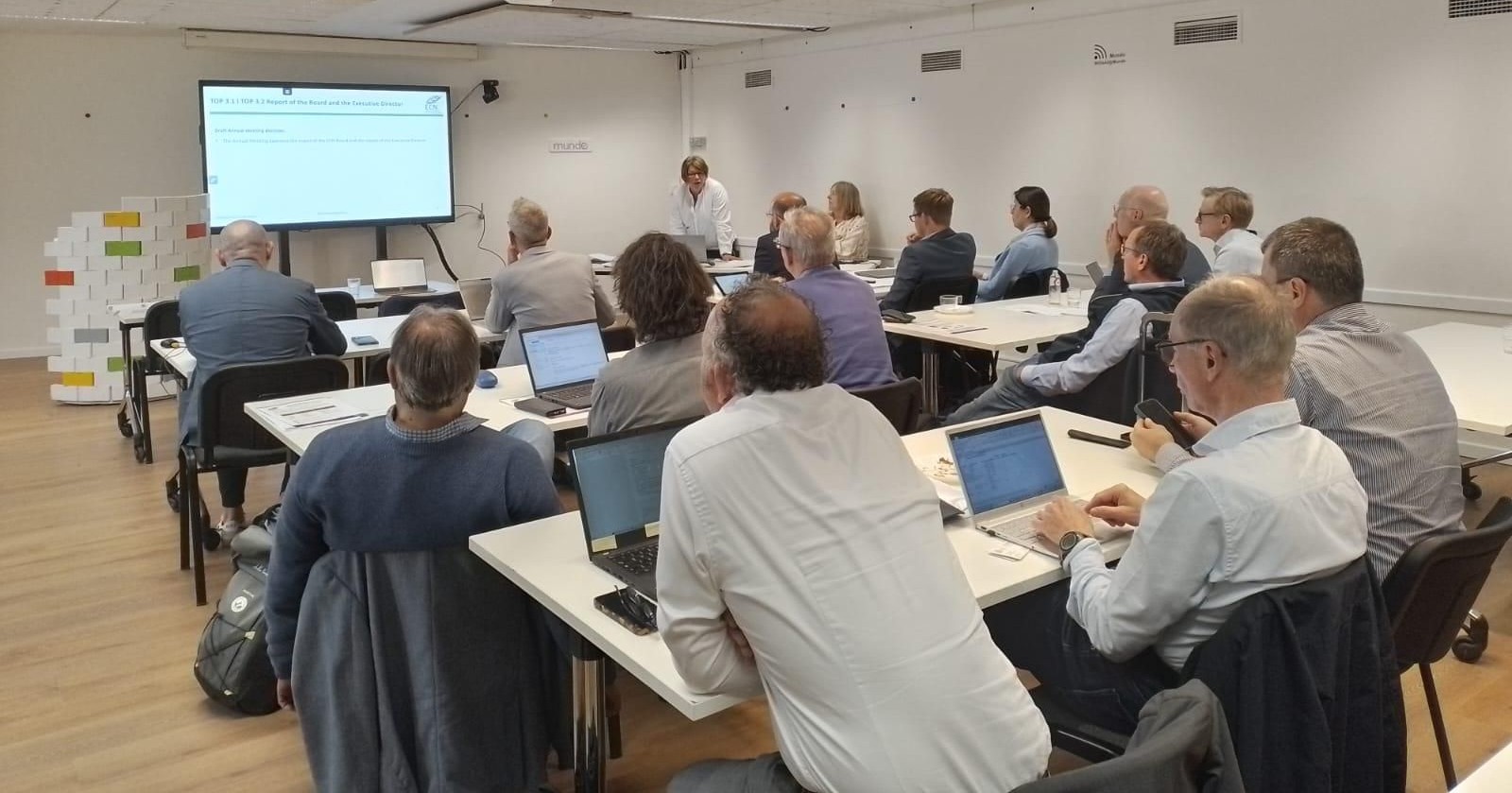
On 8 June, the European Compost Network (ECN) held its Annual Meeting in Brussels, bringing together members from across Europe to review ongoing activities, discuss strategic priorities, and strengthen collaboration across the network.
|
|
We were pleased to welcome Mirabela Lupaescu from DG Environment, who delivered an insightful presentation on the upcoming Bioeconomy Strategy and the implications of future European policies for the biowaste and composting sector.
|
|
Members also heard from ECN Project Officer for Agriculture, Olivier Labrie, who presented ECN's recently developed Fact Sheets on the benefits of compost application to soil. These resources highlight the important role of compost in improving soil health, enhancing carbon sequestration, and supporting sustainable agricultural practices.
|
|
A key outcome of the meeting was the re-election of Tony Breton to the ECN Board for a further three-year term. His re-election reflects the confidence of ECN members in his commitment to advancing sustainable biowaste management, composting, and nutrient recycling in Ireland and across Europe.
|
|
ECN congratulates Tony Breton on his re-election and looks forward to continuing its work with the Board and members in support of a more circular and sustainable Europe.
|
|
We would like to thank all participants for their active engagement and contributions to a productive and successful Annual Meeting. We look forward to continuing our collaboration and advancing our shared objectives in the months ahead.
|
|
|
|
|
|
|
BRIT-EU Reaches Its Final Stage
|
|
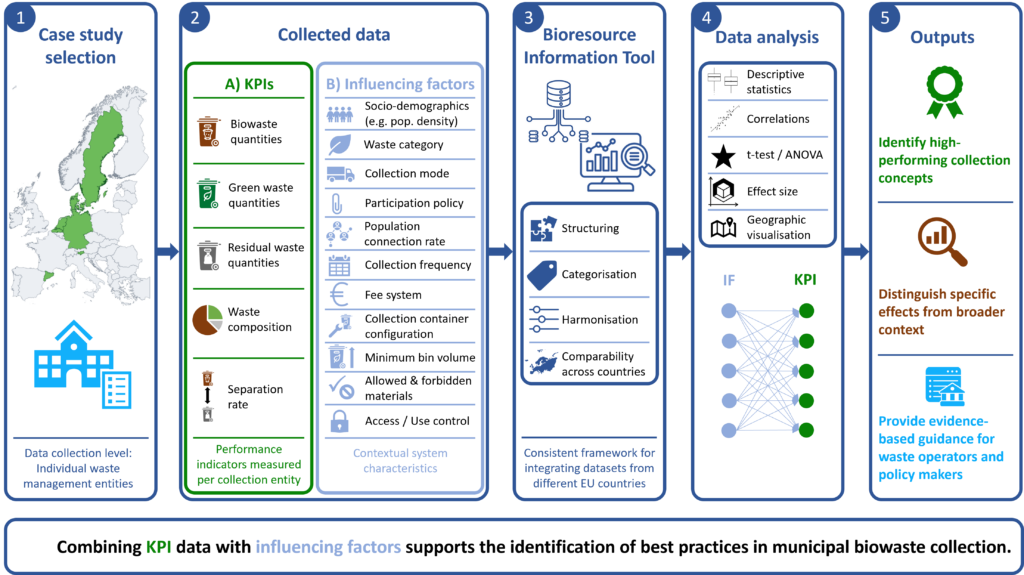
After several years of collaboration, the ECN project BRIT-EU has now come to an end. The project focused on assessing key performance indicators (KPIs) for biowaste collection systems across the EU and identifying their influencing factors (IFs). By analysing these relationships, the project has helped identify best-practice collection concepts and develop evidence-based recommendations for the planning and optimisation of biowaste collection systems.
|
|
A key outcome of the project is a series of Influencing Factor Factsheets, each examining the identified factors within a specific case study region. These factsheets describe the relationships between collection system performance and its contextual system characteristics, aiming at identifying best practices and thus helping waste management operators and policymakers understand the drivers of successful biowaste collection.
|
|
The full BRIT-EU project concept is demonstrated in the figure below.
|
|
|
|
The project results and factsheets are currently being finalised. We look forward to publishing them in the near future and will present the full findings in a dedicated newsletter edition. Stay tuned for further updates.
|
|
|
|
|
|
|
Biotech Act II | ECN feedback on public consultation
|
ECN calls for Nutrient Recycling Targets from biowaste derived materials
|
|
|
|
A study, prepared at the request of the European Parliament and published in April, examines how the bioeconomy can promote farms’ economic sustainability. It analyses policy frameworks, successful circular models in different European countries and trends in biomass valorisation, and provides policy options. The use of digestate, compost or other organic fertilisers is identified as a way to partially replace the purchase of mineral fertilisers and contribute to cost stabilisation. The study recommends investments in all bioeconomy-enabling infrastructures, including composting and digestate treatment.
|
|
|
|
|
|
|
Biowaste conference | “Offene Plattform Bioabfall 2026”, Stuttgart, Germany
|
Annual conference combines policy development and local practical implementation
|
The conference organised by the State Agency for the Environment Baden-Württemberg is an exchange platform for experts from administration, practice, research, policy and plant operation. It connects policy developments from a European to a local level with local implementation practices to improve biowaste management.
Our Scientific Officer Steffen Walk contributed to the programme with a presentation on the results of the BRIT-EU project that aims at identifying best practices in biowaste collection. His contribution linked benchmarking approaches with practical implementation at regional and local level, highlighting how comparable performance indicators and influencing factors can support the improvement of municipal biowaste collection systems. The BRIT-EU project results will soon be published on the ECN website.
|
|
|
|
|
|
|
|
|
Soils for Europe Conference 2026 I 07-11 September I Coimbra, Portugal
|
European stakeholders gather in Coimbra to advance Soil Health and Sustainable Land Management
|
Join researchers, policymakers, land managers, industry representatives, and civil society stakeholders from across Europe at the Soils for Europe Conference.
Co-organised by numerous Mission Soil projects, the conference will showcase the latest research, innovations, and collaborative initiatives supporting healthy soils and sustainable land management. The programme will feature discussions on soil health, biodiversity, carbon sequestration, pollution remediation, urban soil reuse, soil monitoring, citizen engagement, and emerging technologies, alongside a dedicated day focused on Living Labs.
The event is open to researchers and practitioners from all sectors, providing a unique platform to exchange knowledge and advance solutions for Europe's soil challenges.
Key dates: 1 July 2026 – Programme publication
|
|
|
|
|
|
|
20 Years of Evidence for Compost in Sustainable Agriculture
|
Long-term Danish field trial highlights benefits for soil carbon, nutrient recycling and soil resilience
|
A new report from the University of Copenhagen summarises more than 20 years of results from the CRUCIAL field experiment, a long-term study examining the effects of recycled urban and organic nutrient sources on agricultural soils.
The findings show that compost was the most effective treatment for building soil organic carbon (SOC). Over the course of the trial, SOC increased from around 1.4% under mineral fertilisation to as much as 3.5% under compost application. Researchers also found that approximately 45% of the carbon added through compost remained stored in the soil, demonstrating its potential contribution to long-term carbon sequestration.
Long-term compost use improved soil structure, porosity, water retention and nutrient-holding capacity, while supplying significant amounts of recycled nitrogen, phosphorus, potassium and sulphur. Higher soil carbon levels also delivered practical benefits for farmers, reducing tillage energy requirements and lowering fuel consumption by up to 25% compared with mineral-fertilised soils.
The study reported positive effects on soil biodiversity, including improved earthworm performance and increased abundance of soil organisms, while no adverse effects were observed on microbial communities. Heavy metal concentrations remained below regulatory limits, even under accelerated application scenarios far exceeding normal agricultural practice.
The results provide additional valuable evidence that compost can support nutrient recycling, soil carbon sequestration and the development of resilient agricultural soils.
|
|
|
|
|
|
|
|
|
|
|
Registration open I 2-4 September 2024
|
Nordic Biogas Conference 2026 - Reykjavík (IS)
|
|
The Nordic Biogas Conference is a great opportunity to meet companies, researchers, and public organizations involved in developing biogas solutions in the Nordic countries and beyond.
|
|
The Nordic Biogas Conference 2026 will explore the recent developments and future perspectives of a biogas industry running fast – not only supplying green energy and security of supply for a wide range of sectors, but also green fertilizer for agriculture, and providing biogenic CO2 for carbon storage and production of e-fuels for heavy road vehicles, ships and airplanes.
|
|
The conference will consist of plenary and parallel sessions with leading representatives from companies, the academy, and public organizations; a conference dinner; an exhibition space; a research poster session; a study tour; and ample opportunities for networking.
|
More information: LINK
Register here: LINK
|
|
|
|
|
|
|
Registration open I 9-11 November 2026
|
ISWA World Congress 2026
|
|
The ISWA World Congress 2026, hosted by CIWM in partnership with ISWA, is dedicated to showcasing global best practices in resource and waste management.
|
|
Join ISWA in highlighting the critical role of effective systems in protecting health, the environment and economies, promoting circular economy principles, and strengthening international collaboration to help move the world beyond waste.
|
|
More information here: LINK
|
|
|
|
|
|
|
Registration open I 11-12 November 2026
|
3rd Austrian Compost Congress
|
|
The Austrian Compost and Biogas Association is organizing the 3rd Austrian Compost Congress from November 11th to 12th, 2026, at the Francisco Josephinum in Wieselburg.
|
This year, you can once again expect interesting lectures and discussions. Well-known exhibitors from the composting sector will be present! 250 visitors are expected.
Key topics of the event will include:
|
- What are the latest developments in laws and standards in the composting sector?
- What are the key issues in the industry?
- Compost vs. composted soils vs. growing media
- What is the value of compost? (Practical reports)
- Technology presentations
|
Join us and register here. Further information can be found at: LINK
|
|
|
|
|
|
S.O.S Save Organics in Soil
|
This international initiative S.O.S. SOIL – Save Organics in Soil, led by the European Compost Network (ECN) and the Italian Composting and Biogas Association (CIC), aims to highlight the importance of soil organic matter to encourage policy makers to develop instruments to move Europe towards implementing sustainable, climate proof soil management practices.
|
|
Sign the manifesto 'Save Organigs in Soil' here.
|
|
|
|
|
|
|
|
|
|
ECN-QAS Trade Mark No 011007168
Trade mark for certified quality assurance
organisations, compost and digestate products
according to ECN-QAS
Website: www.ecn-qas.eu
|
|
|
|
|
|