|
|
EUROPEAN COMPOST NETWORK
ECN e.V.
|
Network for Organic Resources and Biological Treatment
|
|
|
|
|
|
|
ECN E-BULLETIN No. 8_2026
|
|
|
|
|
|
|
EU Commission I Targeted Consultation I 16 September 2026
|
Consultation on the ‘Do No Significant Harm’ Principle
|
|
|
|
The Commission has launched a targeted consultation on the envisaged approach to apply the ‘do no significant harm’ principle to the 2028-2034 Multiannual Financial Framework.
|
|
|
This consultation will help the Commission prepare a guidance on the application of the ‘Do No Significant Harm’ (DNSH) principle (by 2027).
|
|
The DNSH principle defines the environmental and climate conditions EU funds should apply. It means that EU money should not support activities that cause significant harm to the Union’s environmental and climate objectives.
|
|
The DNSH guidance aims to define a clearer, more predictable and more enforceable framework for applying this safeguard across the next Multiannual Financial Framework, replacing the current fragmented approach applied under the current budget.
|
|
In the Commission concept paper on the guidance, mechanical-biological treatment (MBT) plants for municipal waste and waste incineration plants (with exemptions) are listed as activities that could be considered to do significant harm to environmental objectives.
|
|
Link to the consultation: here.
|
|
Deadline for feedback: 16 September 2026.
|
|
|
|
|
|
|
EU Commission | Written answer to MEP question
|
More information on the place of bio-based materials in future Circular Economy Policies
|
|
The EU Commission has responded to a question raised by Finish MEP Katri Kulmuni (Renew) regarding how bio-based materials and products will be taken into account in various EU policies.
|
|
|
In its answer, the Commission explains that several initiatives are intended to support the development of bio-based materials, including the Biotech Act II, the Circular Economy Act (both due by the end of the year), and dedicated work on bio-based plastics under the Packaging and Packaging Waste Regulation. It states that these initiatives will support the uptake of bio-based materials and improve the collection, treatment and use of bio-waste.
|
|
In addition, it advocates a technology- and material-neutral approach to the Ecodesign Regulation, and notes that environmental footprint methods are being revised to take into account the differences between bio-based and fossil materials, such as carbon uptake.
|
|
|
|
|
|
|
|
|
|
|
ECN Task Group Quality Assurance I 8 July 2026
|
Discussion on monitoring approaches of potential hazards in Input Materials for Biological Treatment
|
|
|
|
On 8 July, leading quality managers from compost and digestate quality assurance organisations across Europe met at Vlaco’s office in Mechelen, Belgium, to discuss potential contaminant levels in input materials for composting and anaerobic digestion.
|
|
|
|
|
Three presentations were given to demonstrate how different national quality assurance organisations monitor contaminants in materials entering composting and anaerobic digestion plants. The different approaches to monitoring were discussed, and the analysis results demonstrated that an indicative positive list for input materials for composting and anaerobic digestion would be the most effective way to prevent the dilution and contamination of the final compost and digestate products.
|
|
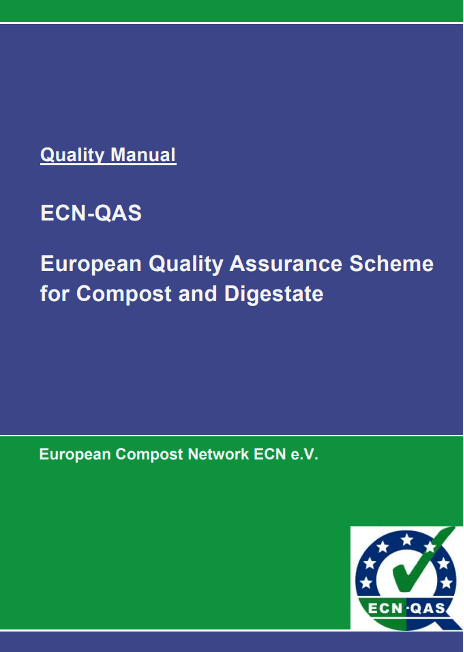
In addition, Stefanie Siebert, the Quality Manager of ECN, presented the revision of the quality manual of the European Quality Assurance Scheme ‘ECN-QAS’.
|
|
|
|
|
This has been updated in relation to the limit values for different impurities (glass, metal, and plastics) in the Fertilising Products Regulation (Regulation (EU) 2019/1009), as well as the European analytical standards under the standardisation mandate M/564 that are due to be officially published in 2027.
|
|
The 4th edition of the ECN-QAS Quality Manual is available here.
|
|
|
|
|
Soils for Europe Conference I 7–11 September 2026 I Coimbra (PT)
|
ECN Presents Long-Term Benefits of Compost for Soil Health
|
|
ECN will contribute to the Soils for Europe conference in Coimbra, Portugal, from 7 to 11 September 2026. Co-organised by several Mission Soil projects, the event brings together researchers, policymakers, land managers and other stakeholders to showcase European research and innovation for healthy and resilient soils.
|
|
Olivier Labrie, ECN Project Officer for Agriculture, will present “Quantifying the Long-Term Agronomic and Economic Benefits of Compost: Soil Health, Nutrient Supply, and Fertiliser Reduction” in Session 9.1 on 9 September. Drawing on long-term compost trials and ECN’s 2026 Fact Sheets, the presentation will highlight compost’s potential to help reverse soil degradation, with 62% of EU soils currently considered unhealthy.
|
|
The presentation will underline the importance of taking a long-term perspective when assessing compost for soil health and farm resilience to climate change. It will focus on organic matter and carbon as key drivers of soil functionality and nutrient provision, and on how greater valorisation of bio-waste into compost could help reduce farm vulnerability and stabilise yields under increasing climate stress.
|
|
|
|
|
|
|
|
|
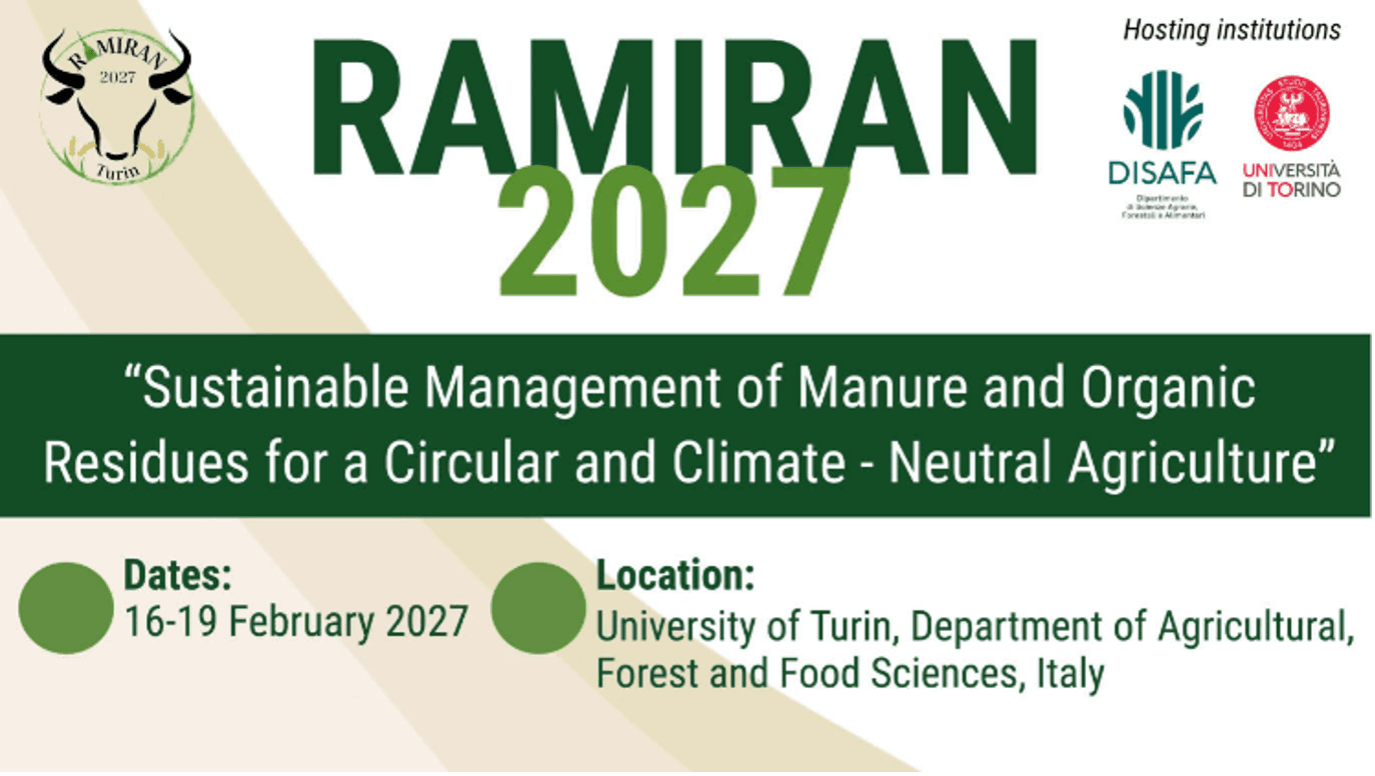
RAMIRAN 2027 – Call for abstracts open until 31 October 2026
|
Sustainable Management of Manure & Organic Residues for a Circular & Climate-Neutral Agriculture
|
|
RAMIRAN 2027 is part of the long-standing RAMIRAN Network (Recycling of Agricultural, Municipal and Industrial Residues in Agriculture), which for over 40 years has brought together researchers, policymakers, industry professionals, farmers and other stakeholders to advance knowledge and innovation in the sustainable use of organic resources.
|
|
|
Hosted by the Department of Agricultural, Forest and Food Sciences (DISAFA) at the University of Turin, RAMIRAN 2027 will provide an international forum for presenting the latest scientific advances, innovative technologies and integrated solutions across the entire organic resource value chain, from processing technologies and nutrient recovery to agronomic utilisation, environmental assessment, digital innovation and policy development.
|
|
Topics of Interest for Circular bio-waste derived products include:
|
|
|
|
- Organic resource processing, nutrient recovery and biofertilisers
- Organic fertilisation and agronomy
- Air emissions, soil and water quality
- Circular economy and climate-neutral agriculture
|
|
|
|
Join the international RAMIRAN community and share your latest research in Turin from 16-19 February 2027!
|
|
Further information: Link
|
|
|
|
|
|
|
LIPOR Seminar I 25 September 2026
|
The future of Climate-Resilient Urban Gardening
|
|
How can urban gardens adapt to hotter and drier conditions? Which crops are best suited to a changing climate, and how can gardens contribute to more resilient communities?
|
|
These questions will be at the heart of “My Garden in Tomorrow’s Climate”, a seminar organised by LIPOR on 25 September at Casa do Corim – The Place of Sustainability. From 8:45 am to 1:00 pm, gardeners and municipal technicians will come together to share knowledge, experiences and practical solutions for adapting urban agriculture to climate change.
|
|
The programme will explore key aspects of climate-resilient gardening, from healthy soils and water management to drought- and heat-resistant crops. Sessions will include “Healthy Soil, Happy Garden”, led by Pedro Nogueira from CIBIO, a presentation on resilient horticultural varieties by agricultural scientist Rosa Moreira, and a practical exchange of experiences featuring the gardens of Famalicão Municipality.
|
|
The morning will conclude with the round table “Roots in Conversation”, bringing together the speakers to discuss the challenges and opportunities facing urban gardens in a changing climate.
|
|
Through this initiative, LIPOR aims to connect technical knowledge with the practical experience of gardeners and highlight the role of urban gardens in promoting biodiversity, healthy soils, responsible resource use, composting and stronger communities.
|
|
Full programme and registration (page in Portuguese): Link
|
|
|
|
|
|
|
|
|
Registration open I 2-4 September 2026
|
Nordic Biogas Conference 2026 - Reykjavík (IS)
|
|
The Nordic Biogas Conference is a great opportunity to meet companies, researchers, and public organizations involved in developing biogas solutions in the Nordic countries and beyond.
|
|
The Nordic Biogas Conference 2026 will explore the recent developments and future perspectives of a biogas industry running fast – not only supplying green energy and security of supply for a wide range of sectors, but also green fertilizer for agriculture, and providing biogenic CO2 for carbon storage and production of e-fuels for heavy road vehicles, ships and airplanes.
|
|
The conference will consist of plenary and parallel sessions with leading representatives from companies, the academy, and public organizations; a conference dinner; an exhibition space; a research poster session; a study tour; and ample opportunities for networking.
|
More information: LINK
Register here: LINK
|
|
|
|
|
Webinar | Biowaste EgJo project I 8 September 2026
|
Practical Guideline for Composting in Arid and Semi-Arid Regions
|
|
The project funded by the German Ministry for the Environment, Climate Action, Nature Conservation and Nuclear Safety (BMUKN) and supervised by the German Environment Agency (UBA) supports the promotion of sustainable organic waste management in the MENA region.
|
The project consortium developed a practical guideline for composting in rural regions, which will be presented in a webinar. The webinar covers:
|
- a brief introduction to the Practical Guideline
- a demonstration of its application in case studies and
- a discussion on key considerations for developing further composting projects.
|
Date: 08 September 2026, 10:00 (CET)
|
|
|
|
|
|
|
Conference I 29 September 2026
|
Compost from Bio- and Green-waste in Organic Farming
|
The event ‘Biowaste and Green Waste Compost in Organic Farming’ examines the current state of compost utilisation in organic farming in Baden-Württemberg. The first part of the event, featuring high-profile speakers, will focus on quality assurance and the suitability of compost for organic farming, as well as the impact of compost fertilisation on humus content, carbon sequestration and climate protection, and the fertility and climate resilience of agricultural soils. In the second, practice-oriented part of the event, the approach to linking organic farming and the circular economy in Baden-Württemberg will be outlined. As part of this, a selection of field trips will be offered.
The event will be held in German. Follow the link for more information: LINK
|
|
|
|
|
|
|
Registration open I 9-11 November 2026
|
ISWA World Congress 2026
|
|
The ISWA World Congress 2026, hosted by CIWM in partnership with ISWA, is dedicated to showcasing global best practices in resource and waste management.
|
|
Join ISWA in highlighting the critical role of effective systems in protecting health, the environment and economies, promoting circular economy principles, and strengthening international collaboration to help move the world beyond waste.
|
|
More information here: LINK
|
|
|
|
|
|
|
Registration open I 11-12 November 2026
|
3rd Austrian Compost Congress
|
|
The Austrian Compost and Biogas Association is organizing the 3rd Austrian Compost Congress from November 11th to 12th, 2026, at the Francisco Josephinum in Wieselburg.
|
This year, you can once again expect interesting lectures and discussions. Well-known exhibitors from the composting sector will be present! 250 visitors are expected.
Key topics of the event will include:
|
- What are the latest developments in laws and standards in the composting sector?
- What are the key issues in the industry?
- Compost vs. composted soils vs. growing media
- What is the value of compost? (Practical reports)
- Technology presentations
|
Join us and register here. Further information can be found at: LINK
|
|
|
|
|
|
|
HumusKlimaTag I 24-25 November 2026 Berlin
|
Across Germany: Exploring Ways to Increase Humus in Arable Soils
|
The HumusKlimaNetz is a pilot and demonstration project to investigate the possibility of increasing humus content in arable soils. The project is being conducted on 150 farms across Germany, half of which are organic and half conventional. The main objective is to evaluate long-term measures for the preservation and buildup of humus. With the aim of implementing these measures on a broad scale by the end of 2027.
More information: Link
|
|
|
|
|
|
S.O.S Save Organics in Soil
|
This international initiative S.O.S. SOIL – Save Organics in Soil, led by the European Compost Network (ECN) and the Italian Composting and Biogas Association (CIC), aims to highlight the importance of soil organic matter to encourage policy makers to develop instruments to move Europe towards implementing sustainable, climate proof soil management practices.
|
|
Sign the manifesto 'Save Organigs in Soil' here.
|
|
|
|
|
|
|
|
|
|
ECN-QAS Trade Mark No 011007168
Trade mark for certified quality assurance
organisations, compost and digestate products
according to ECN-QAS
Website: www.ecn-qas.eu
|
|
|
|
|
|