|
|
EUROPEAN COMPOST NETWORK
ECN e.V.
|
Network for Organic Resources and Biological Treatment
|
|
|
|
|
|
|
ECN E-BULLETIN No. 7_2026
|
|
|
|
|
|
|
European Commission | Certification Framework for Carbon Removals and Carbon Farming
|
Adoption of the Certification Methodology for Carbon Farming
|
|
|
|
On 9 July, the European Commission adopted a Delegated Act and its Annex establishing methodologies to certify carbon farming activities.
|
|
The use of organic soil improvers and organic fertiliser is eligible as a carbon farming activity when it is combined with improved crop management practices. However, the Act refers to the EU Fertilising Products Regulation, which could limit certification only to CE-marked products.
The scope of the certification methodologies also covers GHG associated emissions, such as an increase in N2O emissions from managed agricultural soils or in fuel combustion from field operations or transport to the activity area, which are compared with a baseline scenario. In addition, the text requires that the activity is not financially viable in the absence of revenues from the certification by means of an investment analysis via a simple cost test or an investment comparison test.
The Delegated Act will be transmitted to the European Parliament and the Council for a two-month scrutiny period. In the absence of abjections, it is expected to be officially published in early Autumn.
|
|
|
|
|
|
|
European Commission | EU Emissions Trading System
|
Publication of Commission’s proposal on the revision of the EU ETS Directive
|
|
The European Commission published on 17 July its proposal amending the EU Emissions Trading System (EU ETS) Directive.
|
|
The proposal gives the possibility for Member States to use their EU ETS revenues to help end-users such as farmers, which is in line with the Fertiliser Action Plan. It requires Member States to spend a minimum share of their revenues to support, among others, the development of lead markets for low-carbon and circular products such as bio-based fertilisers. Investments should in particular support end-users in the uptake of bio-based, organic and circular fertilisers, and support the production of affordable low-carbon and bio-based fertilisers, as well as the generation and use of biogas and biomethane.
In addition, the Commission proposes to progressively include municipal waste incineration installations from 2031 to 2034, with an opt-out clause at national level until 2035.
The proposal will now be debated at the Parliament and the Council.
|
|
|
|
|
|
|
ECN study visit to EcoWerf plant in Leuven I 9 July 2026
|
Delegation of European Commission visits an Anaerobic Digestion and Composting Plant
|
|
|
|
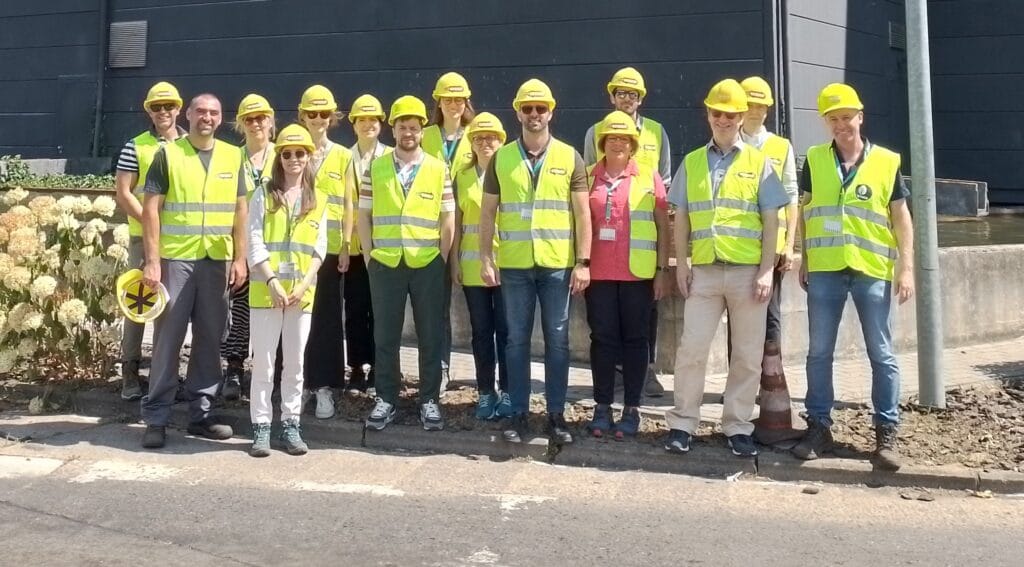
On 9 July, ECN welcomed representatives from the Commission to the EcoWerf co-composting plant in Leuven, Belgium. The visit provided a first-hand look at how separately collected bio-waste from households is turned into high-quality compost and renewable bi-ogas, through a combination of anaerobic digestion and composting treatment.
|
|
It sparked insightful discussions and valuable exchanges on the opportunities and challeng-es of bio-waste recycling. We were delighted by the strong interest shown throughout the visit and the constructive dialogue that took place. We are hopeful that such a field visit will help guide future policies.
|
|
We would like to thank our Flemish member Vlaco and the EcoWerf team for their warm welcome and support in making the visit such a success.
|
|
|
|
|
|
|
|
European Commission I Nitrates Directive
|
Publication of the evaluation of the Nitrates Directive
|
|
On 15 July 2026 the Commission published its evaluation of the Nitrates Directive. The evaluation found that the directive is overall effective and relevant, but identifies scope for smarter implementation.
|
|
Generally, it emphasises that better use of nutrients can reduce reliance on imported mineral fertilisers, and cutting dependency on synthetic nitrogen can strengthen farm resilience and contribute to Europe's strategic autonomy.
It considers that the manure application limit of 170kg N/ha is effective and appropriate, and does not recommend to amend it. However, as announced in the Fertiliser Action Plan and in the Livestock Strategy, the Commission is preparing the ground to extend the RENURE Act for certain types of liquid digestates based on manure, to enable their use above the manure limit in Nitrate Vulnerable Zones with appropriate environmental safeguards. A first preliminary scientific assessment will be delivered later this year. The Annex XIX of the evaluation (in part 11) analyses the role of biogas production and the use of digestates in agriculture.
Climate change will also significantly impact how the Nitrates Directive will be implemented in the future. The Directive's flexibility allows for innovative and resilient approaches to help farms adapt. In this context, the organic matter provided by compost can play an important role in building the soil's resilience to climate extremes by improving soil structure and increasing water holding capacity, helping farms cope with both drought and heavy rainfall.
The evaluation was published together with the latest country reports for the 2020–2023 period, which include recommendations to support Member States.
|
|
|
|
|
|
|
ECN Projects I FertiCovery
|
Consortium, Project Officer and External Reviewer Take Stock After 18 Months of Progress
|
On 23 June 2026, the FertiCovery consortium gathered on Kos Island, Greece, for the project's Month 18 Review Meeting, bringing together partners with the Project Officer and the external reviewer. The meeting offered an opportunity to look back on the achievements of Reporting Period 1 and to look ahead to the work still to come in developing Best Available Technologies for fertiliser production from recovered secondary raw materials.
Across the day, each Work Package presented its progress, from the technology and value chain assessments to the analysis of fertilising products, market and replication potential, and the ongoing stakeholder engagement and dissemination. Notably, the technologies selected include those from ECN members, with composting and anaerobic digestion playing a key role in producing bio-based fertilising products; presenters confirmed these technologies are fit for purpose and already available. The reviewer and Project Officer engaged closely with each presentation, offering constructive and detailed feedback that the consortium welcomed as valuable input for strengthening the project's outputs going forward.
The overall assessment was a positive one: milestones and deliverables were confirmed as satisfactory, and the reviewer commended the consortium's strong technical work, its collaboration with sister projects such as FertiTec, and its engagement with a broad stakeholder community.
All in all, the meeting closed on a positive and encouraging note for the whole consortium, with a clear and constructive path forward for the second half of the reporting period.
|
|
|
|
|
|
|
13th International Conference on Sustainable Solid Waste Management
|
FertiCovery Session Highlights Progress on Bio-Based Fertilisers from Secondary Raw Materials
|
FertiCovery held a dedicated session at the 13th International Conference on Sustainable Solid Waste Management, held on Kos Island, Greece, from 24 to 27 June 2026. The session brought together consortium partners and invited speakers to present the project's work on identifying Best Available Techniques to recover or recycle fertilising products from secondary raw materials.
Presentations covered the project's overall approach and progress, along with insights emerging from the analysis of the 25 selected case studies, spanning technology performance, product composition, microbiological safety and agronomic testing. Two cases studies on composting and anaerobic digestion of bio-waste were presented by RETERRA. Speakers noted strong European Commission policy support for this area of work, with nutrient recovery and bio-based fertilisers now recognised as a strategic priority under the EU's new Fertiliser Action Plan, alongside circular economy and wastewater legislation.
Overall, the session confirmed that FertiCovery is progressing well. Laboratory results across the assessed technologies indicate that the fertilising products are generally safe, largely compliant with existing standards, and show promising agricultural performance. Regulation remains a barrier in some cases: several of the technologies involved are already mature, but full regulatory compliance can still be a limiting factor. At the same time, a number of individual cases demonstrate that commercial-scale deployment is achievable.
More info: LINK
|
|
|
|
|
|
|
EUSO Soil Degradation Dashboard I Joint Research Centre
|
First EU-Wide Assessment Shows 62% of European Soils Are Degraded
|
The EU Soil Observatory (EUSO) has launched its Soil Degradation Dashboard, the first EU-wide assessment of where soil degradation is occurring and how severe it is. Developed by the Joint Research Centre, the Dashboard brings together nineteen indicators covering processes such as erosion, loss of organic carbon, compaction and pollution, drawing on the latest available scientific data.
The headline finding is stark: around 62% of EU soils are currently classed as degraded, with agricultural and artificial land showing the poorest health. The Dashboard lets users explore this picture in detail, comparing degradation levels across Member States, examining how different degradation processes relate to one another, and diving into each individual indicator through interactive maps and charts.
By making this evidence accessible in one place, the Dashboard is intended to support policymakers, researchers and land managers in targeting soil protection efforts where they are needed most, and to serve as a baseline against which future progress can be tracked.
More info: EUSO Soil Degradation Dashboard - Fact Sheet Publication
|
|
|
|
|
|
|
Save the Date I February 2027 I Torino (IT)
|
Organic Residues for a Circular and Climate-Neutral Agriculture
|
The Organising Committee is delighted to invite you to the 20th RAMIRAN Conference. The RAMIRAN will take place from 16-19 February 2027 in Torino (Italy). Please exchange ideas, present your latest research and contribute to shaping the future of sustainable agriculture with the Organising Committed.
More info: LINK
|
|
|
|
|
|
|
|
|
|
|
Registration open I 2-4 September 2024
|
Nordic Biogas Conference 2026 - Reykjavík (IS)
|
|
The Nordic Biogas Conference is a great opportunity to meet companies, researchers, and public organizations involved in developing biogas solutions in the Nordic countries and beyond.
|
|
The Nordic Biogas Conference 2026 will explore the recent developments and future perspectives of a biogas industry running fast – not only supplying green energy and security of supply for a wide range of sectors, but also green fertilizer for agriculture, and providing biogenic CO2 for carbon storage and production of e-fuels for heavy road vehicles, ships and airplanes.
|
|
The conference will consist of plenary and parallel sessions with leading representatives from companies, the academy, and public organizations; a conference dinner; an exhibition space; a research poster session; a study tour; and ample opportunities for networking.
|
More information: LINK
Register here: LINK
|
|
|
|
|
Conference I 29 September 2026
|
Compost from Bio- and Green-waste in Organic Farming
|
|
|
The event ‘Biowaste and Green Waste Compost in Organic Farming’ examines the current state of compost utilisation in organic farming in Baden-Württemberg. The first part of the event, featuring high-profile speakers, will focus on quality assurance and the suitability of compost for organic farming, as well as the impact of compost fertilisation on humus content, carbon sequestration and climate protection, and the fertility and climate resilience of agricultural soils. In the second, practice-oriented part of the event, the approach to linking organic farming and the circular economy in Baden-Württemberg will be outlined. As part of this, a selection of field trips will be offered.
The event will be held in German. Follow the link for more information: LINK
|
|
|
|
|
|
|
Registration open I 9-11 November 2026
|
ISWA World Congress 2026
|
|
The ISWA World Congress 2026, hosted by CIWM in partnership with ISWA, is dedicated to showcasing global best practices in resource and waste management.
|
|
Join ISWA in highlighting the critical role of effective systems in protecting health, the environment and economies, promoting circular economy principles, and strengthening international collaboration to help move the world beyond waste.
|
|
More information here: LINK
|
|
|
|
|
|
|
Registration open I 11-12 November 2026
|
3rd Austrian Compost Congress
|
|
The Austrian Compost and Biogas Association is organizing the 3rd Austrian Compost Congress from November 11th to 12th, 2026, at the Francisco Josephinum in Wieselburg.
|
This year, you can once again expect interesting lectures and discussions. Well-known exhibitors from the composting sector will be present! 250 visitors are expected.
Key topics of the event will include:
|
- What are the latest developments in laws and standards in the composting sector?
- What are the key issues in the industry?
- Compost vs. composted soils vs. growing media
- What is the value of compost? (Practical reports)
- Technology presentations
|
Join us and register here. Further information can be found at: LINK
|
|
|
|
|
|
S.O.S Save Organics in Soil
|
This international initiative S.O.S. SOIL – Save Organics in Soil, led by the European Compost Network (ECN) and the Italian Composting and Biogas Association (CIC), aims to highlight the importance of soil organic matter to encourage policy makers to develop instruments to move Europe towards implementing sustainable, climate proof soil management practices.
|
|
Sign the manifesto 'Save Organigs in Soil' here.
|
|
|
|
|
|
|
|
|
|
ECN-QAS Trade Mark No 011007168
Trade mark for certified quality assurance
organisations, compost and digestate products
according to ECN-QAS
Website: www.ecn-qas.eu
|
|
|
|
|
|